

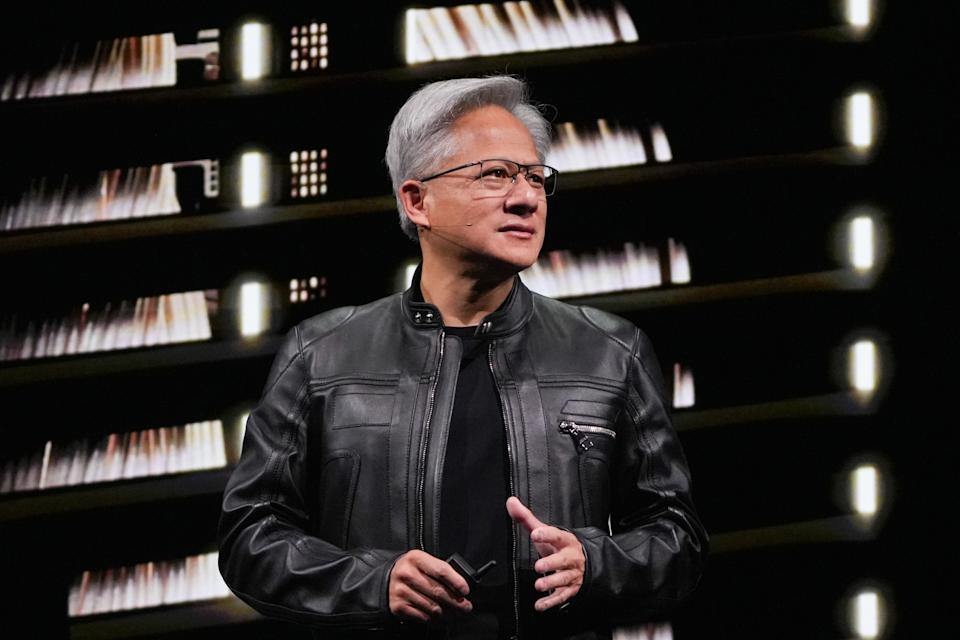
Nvidia’s CEO Jensen Huang Summons AI Road Show Nvidia AI Road Show 2025 to DC With US Nearing China Deal
Nvidia Corp. Nvidia AI Road Show 2025 has spent the past three years ensnared in an escalating trade impasse between the US and China that has kept its prized artificial intelligence chips out of a crucial market and cost it billions of dollars in revenue Nvidia AI Event 2025.
- AI-Generated Movies in 2026: The Beginning of a New Era in Filmmaking
- Faceless.video Explained: Automated Video Creation Made Simple
- Open AI UpdatesOpenAI Deep Research & New Version Details
- 2026 Guide: How to Start Earning with AI and Build a Profitable Business
- Free Legal Movie Streaming with ChatGPT: 7 Powerful Prompts to Turn Your Laptop into a Home Cinema
- Why 2026 Is the Best Time to Build Mobile Apps with AI for Online Earning
- YouTube was built on creators. Today, it’s being flooded by AI-generated volume with no value.
- How to Make Money with AI: 7 Proven Methods + Complete Step-by-Step Roadmap (2025 Guide)
- Unlock AI Power Now: Top 10 AI Tools in 2025 A Proven Beginner’s Roadmap to Mastery
- Perplexity Score in AI: How It Works and Why It Matters (2025 Guide)
Now, the same week President Donald Trump plans to meet China’s Xi Jinping to finalize a trade deal between the world’s top two economies, Nvidia will hold one of its biggest AI conferences at a massive convention hall just blocks from the White House — a clear sign of the growing stakes in Washington for the world’s most valuable company.
While Nvidia’s events have become essential gatherings for the booming AI industry, there’s an audience outside of the several thousand software and hardware developers at the GPU Technology Conference that Chief Executive Officer Jensen Huang will seek to court: policymakers in the nation’s capital who influence where the chipmaker can do business.
Huang will deliver his highly anticipated keynote for the first time in Washington at noon on Tuesday. His remarks in the past have focused on new products and his vision for bringing AI into everyday use, through robotics, business automation and self-driving vehicles. Yet offstage, the Nvidia founder has actively sought changes to US policy, particularly export controls that have effectively blocked Nvidia from selling its most advanced chips to China, the world’s largest semiconductor market.
“We went from 95% market share to zero market share in about 40% of the world’s AI market,” Huang said in reference to China during a recent Fox News interview. “If our goal is to have 90% of the world build on the American tech stack someday, we’re off to a relatively poor start.”
Absent from the event will be Trump, who’s traveling in Asia and is set to meet Xi on Thursday in South Korea on the sidelines of the Asia-Pacific Economic Cooperation summit. The two leaders are poised to seal a preliminary agreement unveiled Sunday by US and Chinese negotiators that US Treasury Secretary Scott Bessent said includes China’s pledge to defer export limits on rare earths in exchange for Trump dropping his threat of 100% tariffs.
Bessent said, however, the accord does not include changes to US export controls currently directed at China, marking a potential setback to Nvidia’s bid to rejoin the Chinese market. In August, Trump relaxed US curbs on shipments of some of the company’s less-powerful AI chips to China, but officials in Beijing have discouraged local firms from buying those H20 processors.
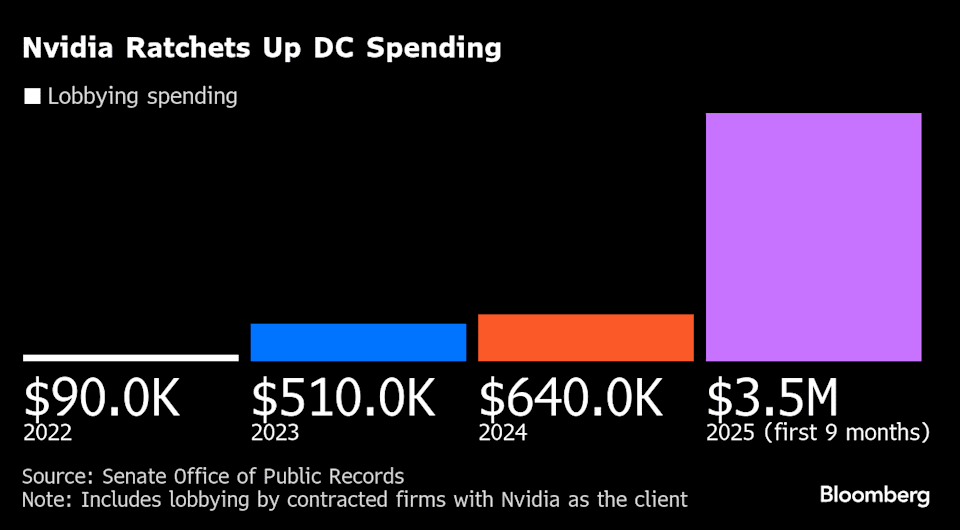
Since Trump’s reelection, Nvidia AI Road Show 2025 Nvidia boosted spending on lobbying to about $3.5 million in the first nine months of this year, up from $640,000 for all of 2024. The company gave $1 million to Trump’s inaugural celebration, and it’s hiring more staff for its DC office. For the AI chips giant that recently booked more than $26 billion in quarterly net income, the lobbying costs boil down to a rounding error, but that kind of money is enough to make waves in Washington.
Unlike other Big Tech CEOs, Huang skipped Trump’s swearing-in ceremony in January, but he has made up for it by joining the president in unveiling the administration’s AI Action Plan and tagging along on official trips to the UK and Middle East to unveil new chip deals. The two men have forged a bond, Nvidia AI Event 2025 with Trump joking at an event last month that Nvidia was “taking over the world,” while Huang has praised the president’s efforts to boost domestic investment.
Huang has also won support from key administration officials including Commerce Secretary Howard Lutnick and White House AI Policy Czar David Sacks, who have embraced the Nvidia chief’s view that American AI technology should be propagated worldwide by loosening export curbs and forging investment deals with key trading partners.
“I’m looking forward to getting back into the global market, so that we can compete for American leadership,” Huang said in the Fox interview, echoing the AI Action Plan wording while downplaying the benefits to his company’s revenue.
Huang and Sacks now use almost identical language to describe their preferred geopolitical strategy where American companies dominate the global “tech stack.” The White House adviser recently said he thinks that if US companies have 80% market share in five years, “that means that we have won.”
With questions remaining about which of its chips — and how many — can be sold to China, Nvidia’s return on its Washington investment is still up for debate. Investors cheered Trump’s plan to allow resumed sales of the company’s H20 chips, designed specifically for the Chinese market, in exchange for handing over 15% of the revenue to the US government. Yet Nvidia’s revenue projections still do not include those sales, since China has said it’s no longer interested in the chips and a legal framework for the revenue sharing also remains incomplete.
Though it didn’t include China revenue in its official projections, Nvidia dangled up to $5 billion in H20 revenue during a recent earnings call. Chief Financial Officer Colette Kress said that amount could be realized in just three months if “geopolitical issues subside.”
Nvidia’s effort to return to the Chinese market has drawn fire from China hawks in Washington who see it as a national security risk. Republican Senator Jim Banks proposed a bipartisan amendment to an upcoming defense bill that would limit advanced chip sales to foreign nations by giving American customers first dibs. In the House, the Republican head of the China Select Committee, Representative John Moolenaar, objected to selling H20 chips to China, saying the US must “hold the line” on earlier restrictions.
With these policy tensions brewing, conference attendees have paid as much as $540 per ticket for the chance to hear Huang deliver his Tuesday keynote during what’s typically a technology-focused event. Government employees were able to register for free.
Nvidia AI Event 2025 Republican Senator Todd Young is on the agenda to discuss AI and biotechnology, while Democratic Representative Sam Liccardo of California will speak about US technological leadership on Wednesday. After the event, Huang is expected to travel to South Korea for a gathering of business executives that’s running parallel to the APEC leaders summit.