
- Introduction: When Creation Turned Into Production
- How YouTube Was Originally Built on Human Creativity Before AI-generated content on YouTube Took Over
- The Rise of AI-Generated Content on YouTube
- Content Farms and the Economics of “No Value” Videos in the Age of AI-generated content on YouTube
- AI Content vs Creator Content: A Structural Comparison
- Why Discovery Is Breaking for Real Creators
- Viewer Trust Is Quietly Eroding
- Why Moderation Can’t Keep Up
- The Dead Internet Theory: No Longer Abstract
- A Personal Observation From the Creator Side
- What This Means for the Future of YouTube
- How Creators Can Still Win in an AI-Flooded Platform
- Conclusion: Volume Is Loud. Value Endures.
Introduction: When Creation Turned Into Production
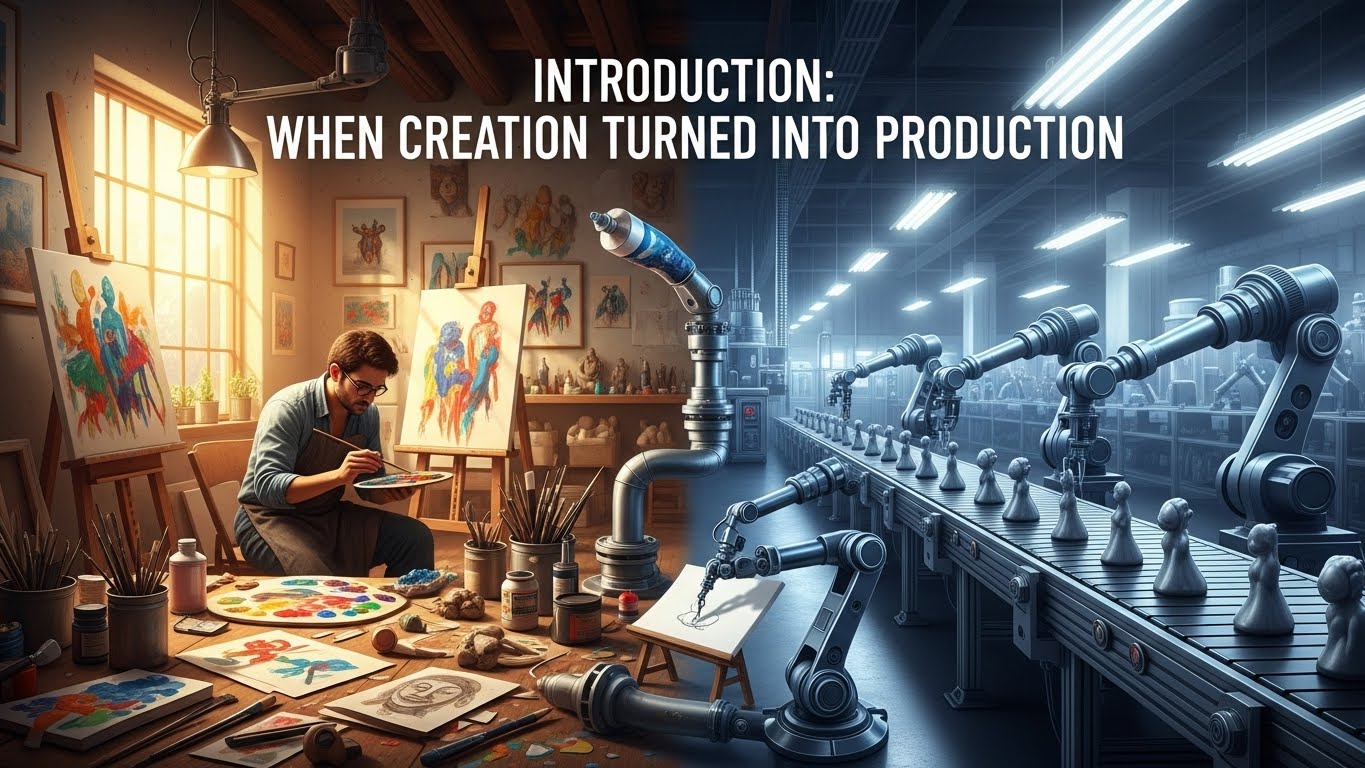
YouTube was never meant to be a factory. AI-generated content on YouTube
In its early years, YouTube thrived because of creators—individuals with stories, opinions, skills, and imperfections. People clicked Subscribe because they trusted a human voice on the other side of the screen.
Today, that trust is under pressure.
A growing share of the platform is now dominated by AI-generated content on YouTube—videos produced not to inform, entertain, or inspire, but to exploit algorithms. The goal is no longer connection; it’s volume. And the cost is being paid by both creators and viewers.
This shift isn’t just aesthetic. It’s structural. And if you’ve felt that YouTube recommendations are starting to feel repetitive, soulless, or strangely hollow, you’re not imagining it.
How YouTube Was Originally Built on Human Creativity Before AI-generated content on YouTube Took Over
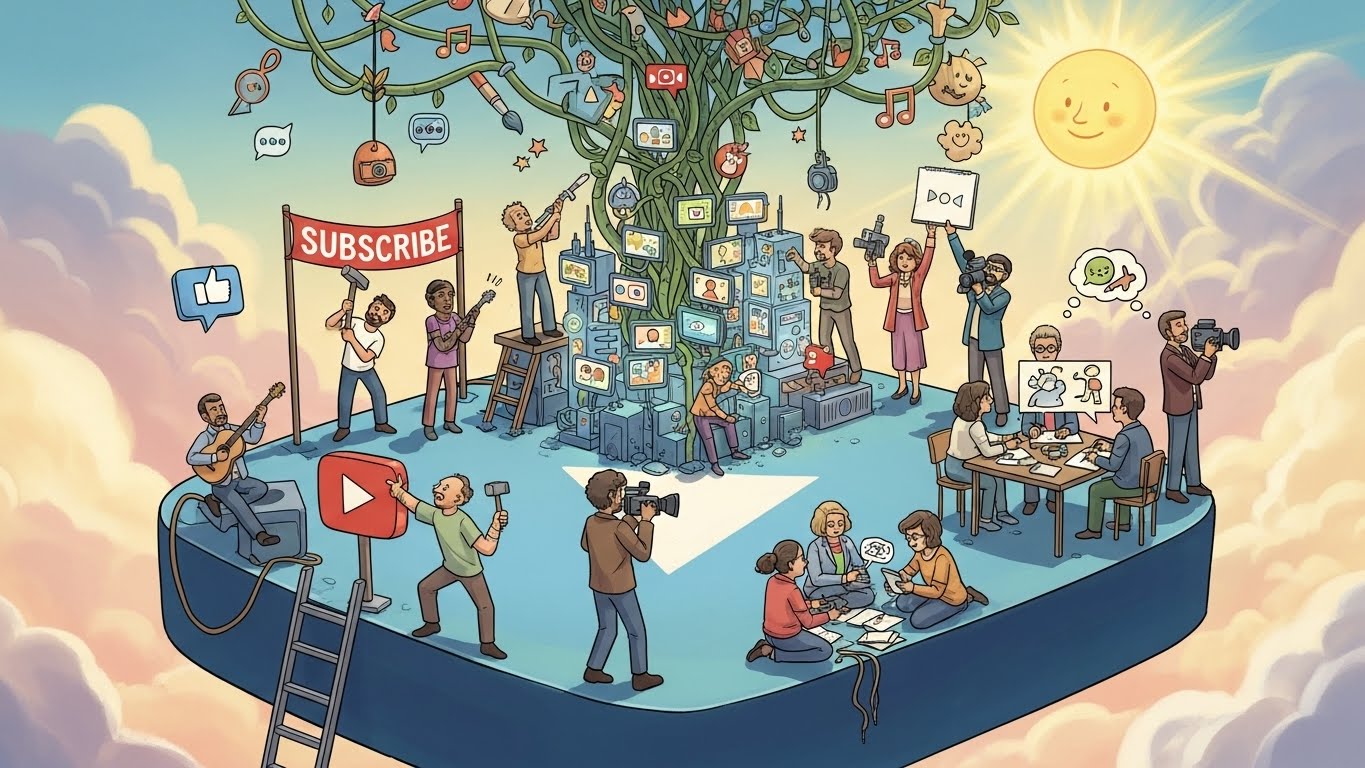
In its creator-first era, YouTube rewarded:
- Original ideas
- Personal storytelling
- Expertise earned through experience
- Long-term audience trust
Discovery wasn’t perfect, but it favored signals that only humans could generate consistently:
watch time tied to interest, comments rooted in discussion, and communities formed around shared values.
Creators didn’t “scale” content. They grew it.
Even when creators optimized titles or thumbnails, the core value still came from the video itself. Viewers stayed because something meaningful was delivered.
More Updates:-
- What Is ChatGPT Jobs? OpenAI’s New Career-Focused AI Agent
- Human vs Artificial Intelligence: AI Has Intelligence, Not Curiosity — And That Changes Everything
- How to Use Gemini AI + Google Search Data to Build a Profitable Side Hustle in 2026
- Why 2026 Is the Best Time to Build Mobile Apps with AI for Online Earning
- Introduction to Google Gemini 1.5 Pro – The New Era of Intelligent AI
- GitHub Copilot (2025 Guide): Features, Pricing, and How to Make Money Using It
- Ways to Earn Money with AI in
- Latest AI News Around the World
- Free Legal Movie Streaming with ChatGPT: 7 Powerful Prompts to Turn Your Laptop into a Home Cinema
- Unlock AI Power Now: Top 10 AI Tools in 2025 A Proven Beginner’s Roadmap to Mastery
The Rise of AI-Generated Content on YouTube
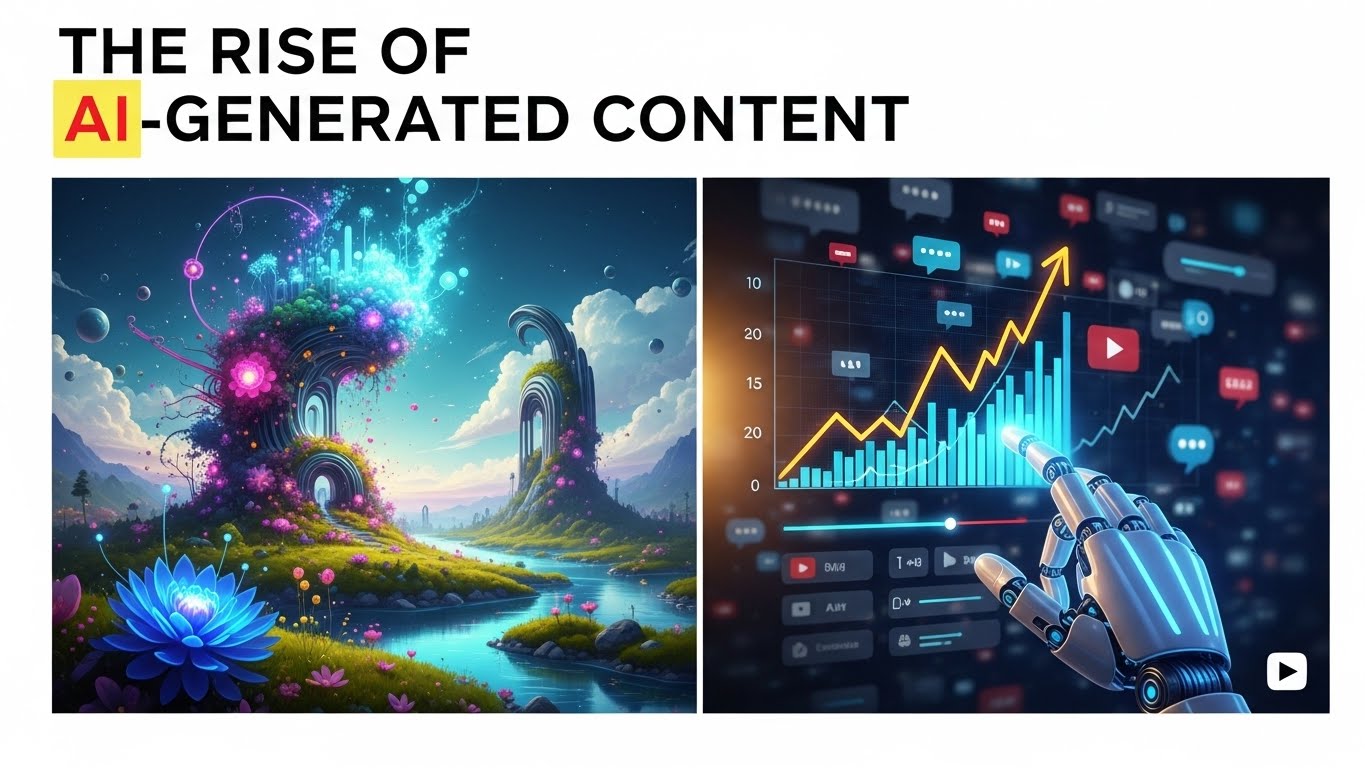
The shift began quietly.
Text-to-speech tools improved. Stock footage libraries expanded. Script generators became cheap. Then came full pipelines where:
- An AI scrapes trending topics
- Another AI writes a script
- A synthetic voice narrates it
- Auto-generated visuals fill the screen
- Videos are uploaded at scale
None of this is illegal. Most of it complies with platform rules.
But compliance is not the same as contribution.
This is how AI-generated content on YouTube became less about creativity and more about arbitrage—finding gaps in the algorithm and flooding them before anyone else notices.
Content Farms and the Economics of “No Value” Videos in the Age of AI-generated content on YouTube
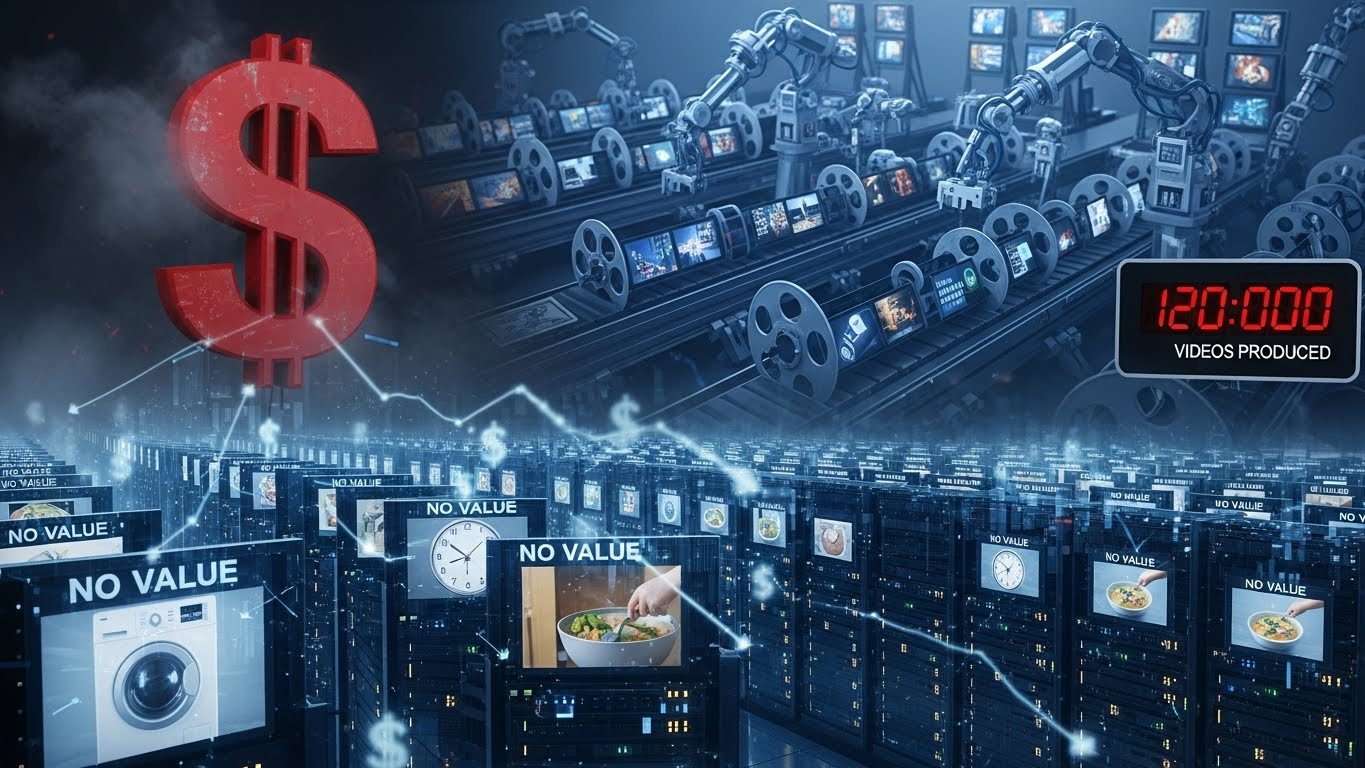
To understand why this is happening, you have to understand incentives.
Why AI Slop Is Profitable
- Ad revenue does not distinguish why someone clicked
- Upload frequency boosts surface-level visibility
- Low production cost means low risk
- Even minimal CPMs scale when multiplied by volume
For content farms, value is irrelevant. Retention beyond a few seconds is optional. Credibility doesn’t matter because the channel itself is disposable.
This is not content creation. It’s content extraction.
AI Content vs Creator Content: A Structural Comparison
| Aspect | Creator-Led Content | AI-Generated Content |
|---|---|---|
| Intent | Inform, entertain, connect | Trigger algorithm signals |
| Production | Time + effort | Automated & scalable |
| Voice | Personal, opinionated | Neutral, generic |
| Trust | Built over time | Disposable |
| Long-term value | High | Near zero |
The danger isn’t AI itself.
The danger is AI optimized for scale, not meaning.
Why Discovery Is Breaking for Real Creators
One of the most frustrating side effects is discoverability.
When thousands of near-identical AI videos flood a topic:
- Signals get diluted
- Recommendation pools get noisy
- Genuine creators compete against machines that never rest
A human creator might upload one thoughtful video a week.
An automated system uploads 50 videos a day.
The algorithm doesn’t understand effort. It understands patterns.
And right now, patterns favor repetition.
Viewer Trust Is Quietly Eroding
This is where the long-term damage appears.
Viewers are learning—often subconsciously—to expect less. They click, skim, leave. Engagement becomes shallow. Comments disappear. Subscriptions lose meaning.
When viewers stop trusting that a click leads to value, platforms enter a dangerous phase:
attention without satisfaction.
This is exactly how the so-called “dead internet” effect starts—not with collapse, but with emptiness.
Why Moderation Can’t Keep Up
It’s tempting to ask why YouTube doesn’t simply remove low-quality AI content.
The reality is more complex:
- Volume is too high
- Quality is subjective
- Automation mimics legitimacy
- False positives risk harming real creators
Moderation systems were designed to catch violations, not meaninglessness.
And meaning is hard to quantify.
The Dead Internet Theory: No Longer Abstract
The dead internet theory suggests that much of online content will eventually be generated for machines, not people.
On YouTube, we are seeing an early version of that future:
- Videos made for algorithms
- Channels built without audiences
- Engagement simulated, not earned
The internet doesn’t die suddenly.
It gets filled.
A Personal Observation From the Creator Side
If you’ve been creating content seriously, you’ve probably noticed:
- Topics saturate faster than ever
- Original ideas get buried quickly
- “Low-effort” videos sometimes outperform high-effort ones
This creates a psychological trap.
Creators either burn out trying to compete with machines—or they lower their standards.
Both outcomes weaken the ecosystem.
What This Means for the Future of YouTube
The future is not “AI vs humans.”
It’s AI with intent vs AI without responsibility.
AI can absolutely help creators:
- Research
- Editing
- Ideation
- Accessibility
But when AI becomes the creator, not the assistant, value collapses.
Platforms that fail to realign incentives will slowly lose cultural relevance—even if revenue looks fine on paper.
How Creators Can Still Win in an AI-Flooded Platform
The advantage humans still have is context.
Creators who survive and grow will focus on:
- Strong points of view
- Lived experience
- Community interaction
- Long-form trust
Algorithms change. Human connection compounds.
Conclusion: Volume Is Loud. Value Endures.
YouTube was built on creators.
Not templates.
Not scripts.
Not infinite uploads.
The flood of AI-generated content on YouTube is not just a quality issue—it’s a philosophical one.
Platforms can optimize for scale.
Creators must optimize for meaning.
And viewers, ultimately, will choose where they feel respected.
AI-Generated Content & Platform Quality
Outbound Link:
MIT Technology Review
👉 Topic: AI-generated content, automation risks, content quality
If you’re a creator, don’t compete with machines on speed. Compete on substance.
If you’re a viewer, reward value with attention.
And if this topic resonates with you, explore related posts on creator economics, AI ethics, and the future of digital platforms—or share your perspective on where YouTube should go next.